Jameda, therapie.de, or Your Own Website — What Do You Need?
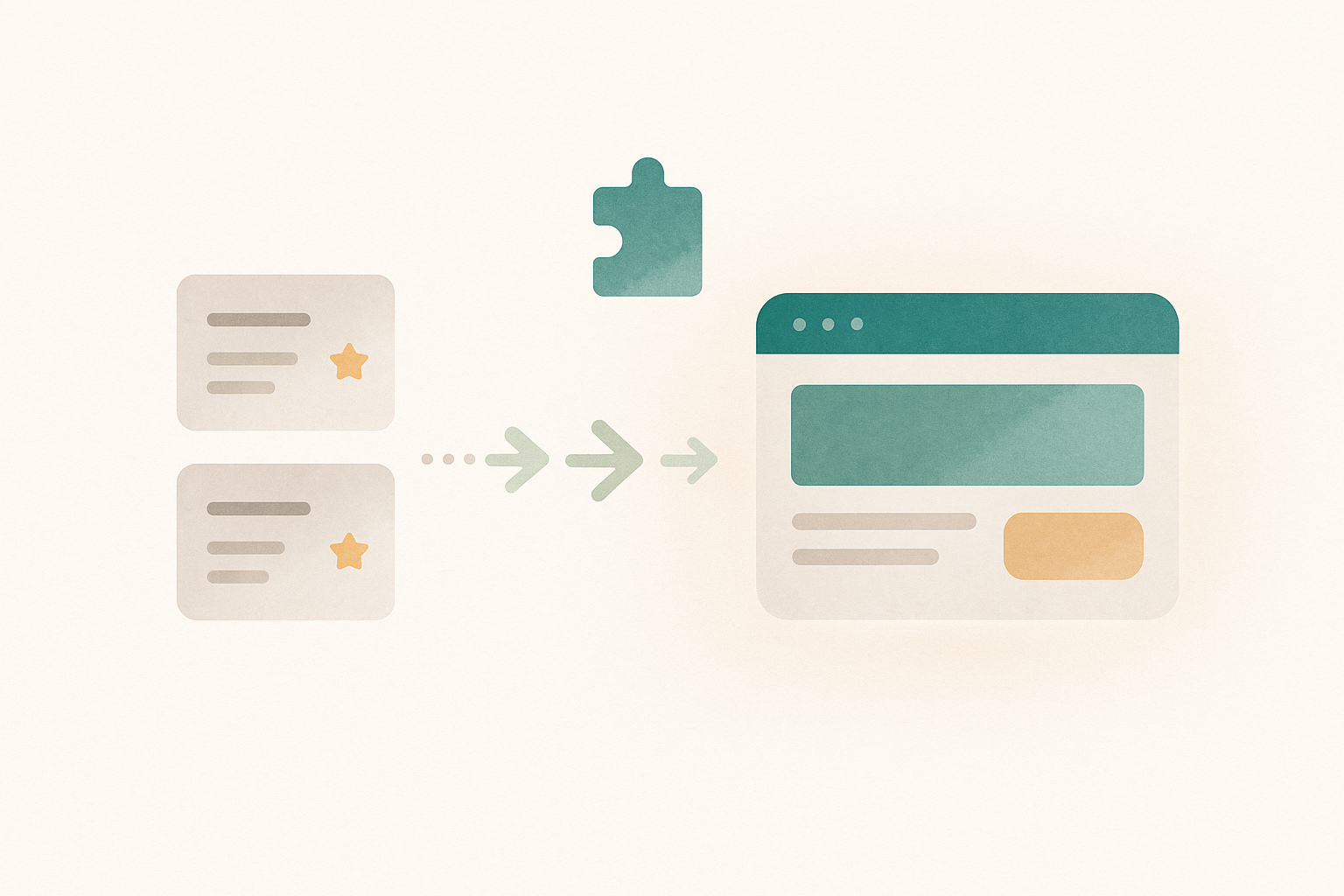
Many therapists don't lack online presence — they're on Jameda, on therapie.de, in the health insurance directory, maybe even on psychology-today.com. Listings exist, sometimes even reviews. And yet at some point the question arises: Do I also need my own website? Or is that double the effort for the same result?
The honest answer: directories and your own website serve different purposes. Those who have both are significantly better positioned. Those who have only one have a gap.
What directories do well
Jameda, therapie.de, and similar platforms have strong reach of their own. They rank well on Google because they have high traffic and extensive content. When someone googles "psychotherapist Munich cognitive behavioral therapy", Jameda almost always appears in the top positions — often ahead of individual practice websites.
This means: a well-maintained directory listing gives you visibility that you would first need to build with a new website of your own. Especially when your own website doesn't yet have history, backlinks, or an SEO foundation, directories are a fast way to be found.
Then there are reviews. Patients look for reviews — and Jameda is the most important platform for that in Germany. Those with good reviews there signal trustworthiness before their own website is even opened.
What directories can't do
A directory listing shows you — but it doesn't show who you are. The profile is limited to what the platform dictates: photo, address, specialty, a few lines of free text. Nothing more.
What's missing is the space for what patients really want to know before they reach out. How do you talk about therapy? What's your approach? How does the first session work? What sets you apart from the other fifteen therapists in the same directory?
These are questions your own website can answer — a directory cannot.
| Aspect | Directory (Jameda & Co.) | Own website |
|---|---|---|
| Reach | High Google rankings, large traffic | Must be built up first |
| Individuality | Standard profile, little design flexibility | Full control over content and design |
| Reviews | Integrated and visible | Not directly possible |
| Competition | Directly next to competitors | No comparison context |
| Dependence | Platform sets rules and costs | You control everything |
| Depth | Limited to predefined fields | Unlimited — your words, your space |
The real problem: dependence
There's an aspect many overlook. Those who rely exclusively on directories are building on sand — sand that someone else owns.
Platforms change. Jameda has changed its review system multiple times in recent years, restricted visibility for free profiles, and introduced new premium options. What works for free today can disappear behind a paywall tomorrow.
Your own website is your digital home. It belongs to you, it shows what you want, and it's independent of what platforms decide.
How both work together
The most effective approach is not either-or, but both — with a clear division of roles:
Those who hit an empty page or nothing at all at this point lose the prospect — even if the directory profile was convincing. That link on your Jameda profile is one of the most valuable there is, because the click comes from someone who is already seriously interested.
What this means for you
If you're already on Jameda or therapie.de: good. That's a solid foundation. But look at where your profile link leads — to your own practice website, or nowhere?
If you don't yet have your own website, now is the moment where it has the greatest leverage — precisely because your directory profiles are already sending visitors who need somewhere to land.