Writing Your About Page as a Therapist — How to Sound Authentic
The about page is the second most visited page on therapist websites. Right after the homepage. Anyone considering reaching out wants to know who they're dealing with — not just what's being offered, but who is there.
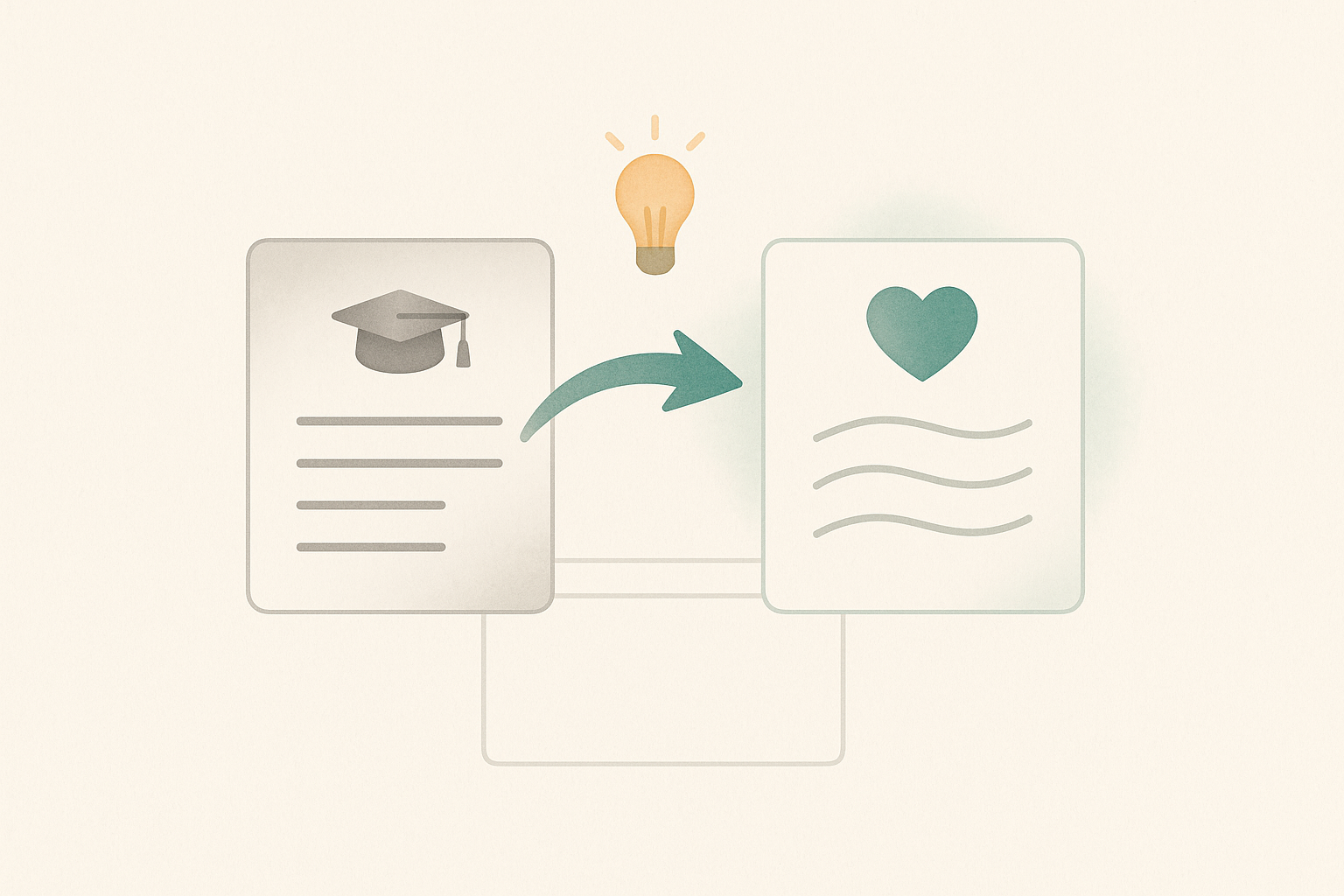
And yet, the about page is the weakest page on most therapist websites. Not because therapists have nothing to say. But because the reflex, as soon as you start writing about yourself, pulls you toward a CV.
Why CVs Don't Convince
A CV answers the question: What did you study? What have you done?
Patients ask a different question: Can you help me? Does this person understand what I'm going through? Would I want to sit across from them?
These are emotional questions, not administrative ones. They aren't answered by dates and certificate titles. They're answered by language — by the way you talk about your work, what you consider important, what drives you.
What Belongs on an About Page
More on writing copy that builds trust — from the homepage to the contact page.
The One Question That Helps When You Don't Know Where to Start
Imagine someone asks you during a coffee break at a conference: "So — what exactly do you do?"
What do you answer? Not what you'd write on your website — what you actually say, in that moment, to that person?
That's exactly what belongs on your about page. Not the official version, but the real one.
What Comes Next
Once you've written your about page, it needs a home that does it justice. A website that's just as clear and personal as the text itself — with a design that makes the right first impression.
Therapendo gives you templates that don't look generic, a structure that highlights what matters, and an inquiry dashboard that ensures someone who reaches out after reading your about page actually gets through to you.